
---
Home   |   Site Map   |   FAQ

[For Teens][For Parents][For Educators]
---
suicidepreventionlifeline.org What's New.

Visit the Society for the Prevention of Teen Suicide, Inc. Bookstore

What Parents Need to Know About Teen Suicide (ABC News)

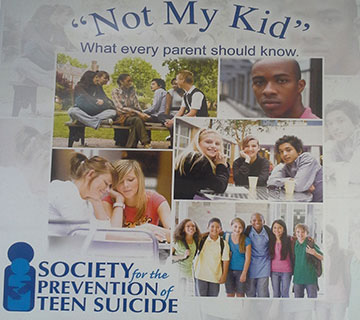
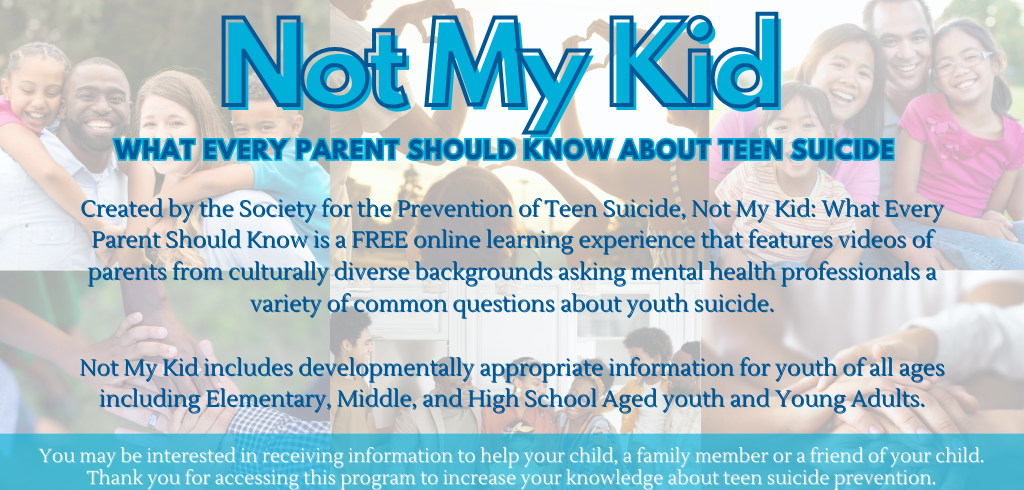
Not My Kid: What Every Parent Should Know video now available

John Kalafat, Ph.D.: Selected Publications (80k PDF)

We need your help!
We are a finalist in the Tom’s of Maine 50 States for Good contest and, with your help, can win a $20,000 grant to help support the renovation of a community center in a small New Jersey town where 10 youth have died by suicide over the last 28 months. This project, which uses teens partnered with adult community members as volunteers, is really important because it will help the youth who have experienced the tragic deaths of so many of their friends focus their energies in a positive way to create a transformed community gathering space inspired by their resilience.


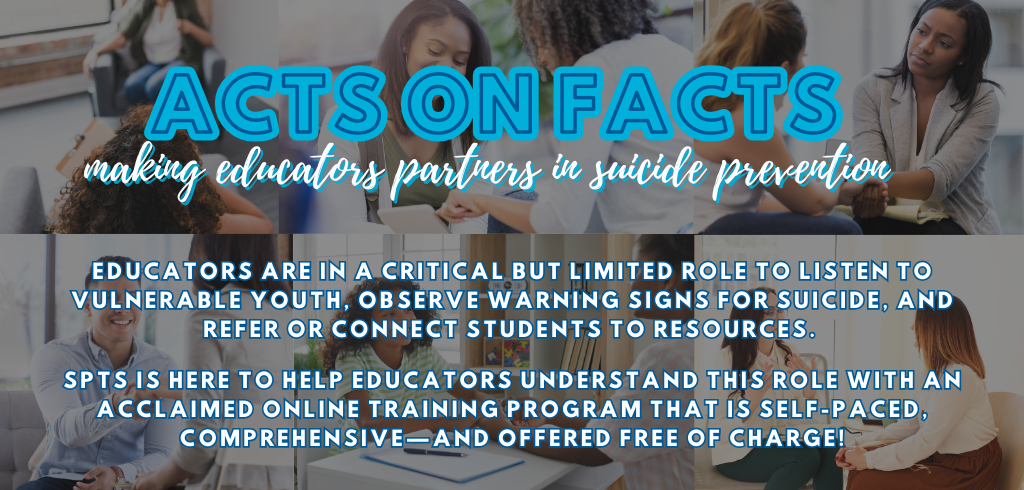
Online Training Now Available The free, interactive series Making Educators Partners in Suicide Prevention is designed to be completed at the viewer's own pace. It provides two hours of professional development credit to New Jersey educators but is open to anyone who is interested in reviewing current strategies for youth suicide prevention in schools.

New! Not My Kid video now online.

The questions to ask about whether or not your child may be at risk for suicide can be complicated. This short video asks and answers a few of those questions but, more importantly, demonstrates how to ask those questions-and keep asking-until you get answers that help you understand whether or not your child is at risk....and what to do about it.

Youth Prevention is Everyone's Business!

For Teens.
For Teens:

Talking about suicidal thoughts and feelings—with the right person—can make all the difference in the world. read more »

For Parents.
For Parents:

One of the more difficult challenges of parenting is realizing that you don't always know what your children are thinking and feeling. read more »

For Educators.
For Educators:

As an educator, we know you often identify students in your classroom who, for one reason or another, seem vulnerable or at risk. But how do you know if what you're seeing is part of the normal ups and downs of adolescence or something more severe?read more »

---